Loading organizations...

Loading organizations...
Microsoft has raised $1.0M across 1 funding round.
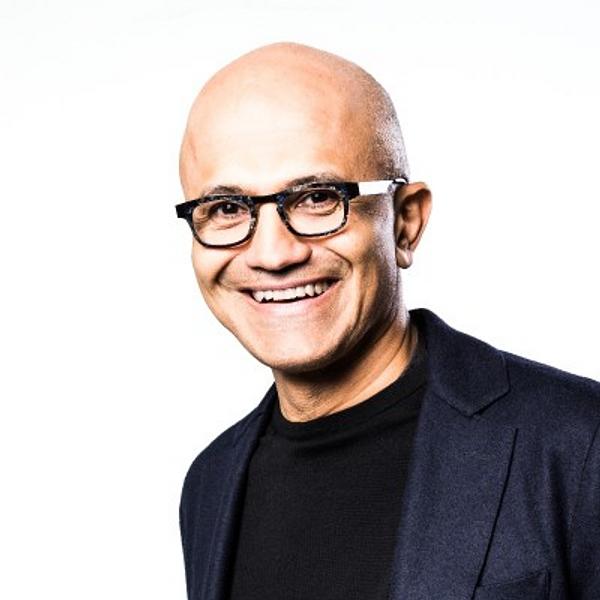
Key people at Microsoft.
It's a program that provides startups with access to technology, mentorship, and resources to help them build and scale their businesses.
Eligible startups can receive up to $150,000 in Azure credits.
Startups gain access to mentorship from industry experts and Microsoft employees with experience in various fields.
Eligibility requirements vary, but generally, startups must be early-stage, privately held, and focused on innovation.
By supporting startups, Microsoft gains access to innovative technologies, potential partnerships, and a pipeline of future talent.
In most cases, Microsoft does not take equity in startups through the Founders Hub program. However, they may invest through their venture capital arm, M12.
Microsoft develops and markets software, services, and devices as a global technology leader. Offerings include Windows, Microsoft 365, Azure cloud computing, and the Xbox gaming platform. The company integrates advanced artificial intelligence, like Copilot, across its portfolio to enhance user experience and efficiency for diverse applications.
Microsoft was founded on April 4, 1975, by Bill Gates and Paul Allen. Their insight came from the Altair 8800 microcomputer. Realizing the market needed accessible software, they developed a BASIC language interpreter, pioneering the personal computer software industry by creating software to unlock hardware potential.
Microsoft serves global clientele from consumers to large enterprises. Its vision is to empower every person and organization to achieve more. The company innovates in cloud and AI technologies, evolving integrated digital experiences to address future demands and accelerate global digital transformation.
It's a program that provides startups with access to technology, mentorship, and resources to help them build and scale their businesses.
Eligible startups can receive up to $150,000 in Azure credits.
Startups gain access to mentorship from industry experts and Microsoft employees with experience in various fields.
Eligibility requirements vary, but generally, startups must be early-stage, privately held, and focused on innovation.
By supporting startups, Microsoft gains access to innovative technologies, potential partnerships, and a pipeline of future talent.
In most cases, Microsoft does not take equity in startups through the Founders Hub program. However, they may invest through their venture capital arm, M12.
Microsoft Corporation is a leading multinational technology company that builds a broad range of products and services including software, cloud computing platforms, AI solutions, hardware devices, and consumer internet services. Its flagship products include the Windows operating system, Microsoft Office productivity suite, Azure cloud platform, Xbox gaming consoles, and AI-powered tools like Microsoft 365 Copilot. Microsoft serves a diverse customer base spanning individual consumers, enterprises, governments, and developers, addressing problems such as productivity, cloud infrastructure, digital collaboration, and intelligent automation. The company has demonstrated strong growth momentum, with fiscal year 2025 revenues reaching $281.7 billion, driven notably by a 34% revenue increase in its Azure cloud business and significant advances in AI innovation[1][2][3].
Founded in 1975 by Bill Gates and Paul Allen, Microsoft began as a software company focused on developing programming languages and operating systems for personal computers. The company rose to prominence with the launch of the Windows operating system, which became the dominant PC platform worldwide. Over the decades, Microsoft expanded into internet services, cloud computing, gaming, and AI, evolving its business divisions to adapt to new technology trends. Key leadership figures include CEO Satya Nadella, who has driven the company’s recent focus on cloud and AI. Microsoft celebrated its 50th anniversary in 2025, marking a half-century of continuous innovation and market leadership[1][2].
Microsoft is riding the wave of AI-driven digital transformation and cloud adoption, trends that are reshaping how businesses operate globally. The timing is critical as AI capabilities mature and enterprises seek scalable, secure cloud platforms to deploy intelligent applications. Market forces such as increasing demand for hybrid work solutions, data sovereignty, and automation favor Microsoft’s broad portfolio and innovation strategy. The company influences the tech ecosystem by setting standards in cloud infrastructure, AI integration, and productivity software, while enabling a new organizational model Microsoft calls the “Frontier Firm,” which blends human judgment with AI agents to drive agility and value creation[4][5].
Looking ahead, Microsoft is poised to deepen its leadership in AI and cloud computing, with continued investment in AI infrastructure, sovereign cloud solutions, and quantum computing. The company’s vision of the Frontier Firm suggests a future where AI-human collaboration transforms work and business models. Trends such as AI democratization, hybrid work, and industry-specific cloud adoption will shape Microsoft’s journey. Its influence is likely to expand as it empowers organizations to harness AI at scale, driving productivity and innovation across sectors. Microsoft’s ability to balance long-term vision with quarterly execution will remain key to sustaining its market dominance and technological impact[2][4][5].
Microsoft has raised $1.0M across 1 funding round. Most recently, it raised $1.0M Venture Round in August 1981.
| Date | Round | Lead Investors | Other Investors |
|---|---|---|---|
| Aug 1, 1981 | $1.0M Venture Round | August Capital |
Key people at Microsoft.