Loading organizations...
Loading organizations...

Key people at Rhodium.
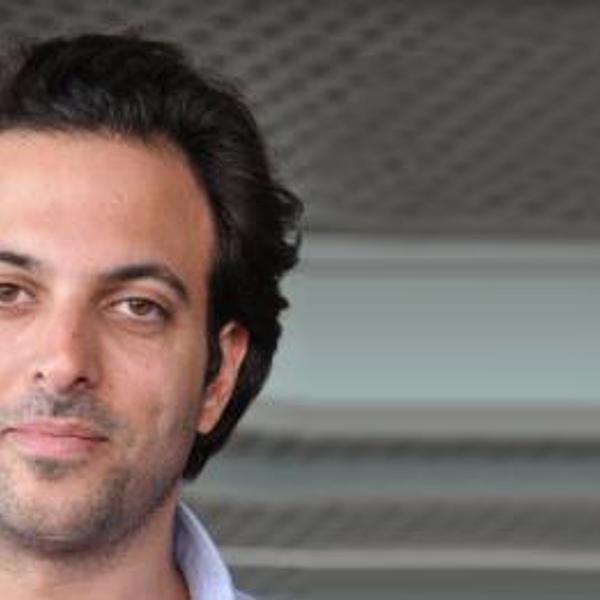
Rhodium was founded in 2007 by Daniel Recanati (Founder, CEO).
Rhodium Group provides independent research, integrating policy expertise with data-driven economic analysis. The firm delivers critical insights for decision-makers navigating complex global challenges. Its analytical focus spans global economics, environmental policy, and geopolitical dynamics, particularly emphasizing China's role across these interconnected spheres.
Daniel H. Rosen founded Rhodium Group in 2008, identifying a demand for objective analysis of international economic and policy trends. Rosen, an adjunct associate professor at Columbia University with expertise in China's commerce, established the firm with founding partner Thilo Hanemann to address this analytical gap.
Rhodium Group serves decision-makers in public and private sectors, informing strategic planning and policy development. The firm’s vision is to be a leading source of forward-looking intelligence, empowering clients to respond to evolving global economic and policy landscapes. It offers foresight for navigating future complexities and opportunities.
Key people at Rhodium.
Rhodium was founded in 2007 by Daniel Recanati (Founder, CEO).
# Rhodium: Multiple Entities Operating Across Investment and SaaS
The search results reveal that "Rhodium" refers to at least three distinct organizations operating in different sectors, each with its own mission and focus. This analysis addresses the primary entities that emerge from available information.
Rhodium (Family Ventures) is an Israeli-based family investment firm that partners with founders across artificial intelligence, impact-driven ventures, mobile technology, commerce, and emerging technologies[1]. The firm provides capital alongside hands-on management expertise and access to a global network of business contacts, positioning itself as a hands-on partner rather than a passive investor.
Rhodium (Seattle-based SaaS startup) represents a more recent venture that has taken an unconventional approach to growth. The company operates a software-as-a-service platform leveraging machine learning and AI to help medical spas and beauty brands understand and engage customers across the entire customer lifecycle[2]. What distinguishes this Rhodium is its merger strategy: rather than remaining a pure software play, the company has consolidated three direct-to-consumer beauty brands—Rootine (wellness drink powders), SiO Beauty (skincare patches), and Solomomo (skin condition measurement devices)—into a unified entity[2]. This vertical integration creates a unique hybrid model combining software infrastructure with branded consumer products.
Rhodium Group operates as an independent research and policy analysis firm focused on global challenges, with particular expertise in areas like direct air capture technology and climate solutions[4].
The Seattle-based Rhodium emerged from the entrepreneurial ecosystem surrounding Petabyte, a data analytics company. CEO Michael Hyman brings substantial technology pedigree, having held leadership positions at Microsoft (late 1990s), Amazon (early 2000s), and Oath (the AOL-Yahoo merger entity)[2]. Co-founder and COO Alex Krooglik previously co-founded both Petabyte and Embrace Pet Insurance, bringing deep expertise in data infrastructure and insurance technology[2].
The company raised $2 million in initial funding, with backing from Relevance Ventures (a Nashville-based VC firm) and Loeb Ventures—both of which had previously invested in Petabyte[2]. This continuity of investor relationships suggests a deliberate strategy to leverage existing trust and networks.
The merger with three beauty brands represents a pivotal moment in the company's evolution. Each brand brought established leadership: Cindy Engstrom (Solomomo founder) became Chief Marketing Officer, Rachel Sanders (former investment banking associate) leads Rootine, and Audrey Leibovich (marketing and merchandising veteran) leads SiO Beauty[2]. This consolidation occurred relatively early in the company's lifecycle, indicating a bold bet on vertical integration rather than the typical SaaS scaling playbook.
The Seattle-based Rhodium operates at an interesting inflection point in the beauty and wellness technology market. The medical spa and beauty industry has historically lagged in data sophistication compared to other consumer sectors. By combining AI-driven customer intelligence with direct ownership of consumer brands, Rhodium addresses a genuine market gap while creating a defensible moat through proprietary customer data.
The company's model reflects broader trends: the convergence of SaaS and direct-to-consumer commerce, the increasing importance of first-party data in a post-cookie world, and the recognition that software alone often cannot achieve sufficient scale in competitive markets. By owning the brands that generate the data, Rhodium eliminates the chicken-and-egg problem many B2B SaaS companies face in customer acquisition.
The Israeli Rhodium (Family Ventures) operates within the broader context of family office diversification and the professionalization of venture capital in emerging markets. Its focus on impact alongside financial returns reflects the growing alignment between capital allocation and sustainable development goals.
The Seattle Rhodium represents an intriguing experiment in blending software infrastructure with consumer brand ownership. If successful, this model could demonstrate that vertical integration—owning both the platform and the data sources—creates competitive advantages that pure-play SaaS companies cannot match. The company's ability to scale the platform across its three brands while maintaining operational efficiency will be critical to validating this thesis.
The near-term focus will likely involve optimizing the unified platform across Rootine, SiO Beauty, and Solomomo, demonstrating clear ROI improvements for customers, and potentially expanding the customer base beyond the three owned brands. Success here could position Rhodium as an acquirer of additional beauty and wellness brands, creating a roll-up strategy powered by proprietary software.
For the Israeli family office, continued focus on impact-driven ventures in AI and climate tech positions it well within the broader ESG investment movement, though the firm will need to demonstrate measurable returns alongside social impact to maintain investor confidence.
Both entities operate in markets where data, personalization, and technology are becoming table stakes—suggesting that despite the name overlap, these Rhodium organizations are well-positioned within their respective ecosystems.